


Water Heaters
Buy vs Rent a Water Heater in Ontario: 15-Year Cost Comparison
Renting a power vent water heater in Ontario costs more than $6,800 over 15 years at typical rates. Buying one installed starts at $2,195. Here's t...
 Tank Water Heater40–60 gal, installed from $2,195
 Tankless Water HeaterEndless hot water on demand
 FurnaceLennox high-efficiency gas furnaces
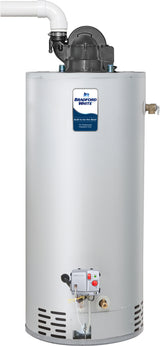 Power Vent TankVents through the wall
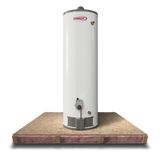 Chimney Vent TankSimple swap, no fan needed
 Two-Stage FurnaceQuieter, more even heat
 Water SoftenerSofter water, 80% less salt
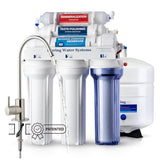 Reverse OsmosisPure drinking water at the tap
 UV Water SterilizerWhole-home disinfection
 HEPA Air FiltrationTraps 99.97% of particles
 UV Air PurifierStops mould and bacteria
 HRV VentilatorFresh air, heat kept in
Helpful articles on furnaces, water heaters, water treatment and home comfort.
View all articlesProudly installing across the GTA, Halton, Waterloo Region, Durham and the Kawarthas.
Toronto · Mississauga · Markham · Oshawa · Kitchener · Peterborough
Answers to common questions about pricing, installation and equipment.
10 years keeping Ontario homes warm, with hot water you can count on.
Understand our simple process, from choosing your system to installation day.
Upfront installed pricing, same-day installs and certified, insured installers.
5.0 stars from 55 reviews. See what homeowners say.
Manufacturer warranties registered for you, plus our 10-day money-back guarantee.
How much flexibility do you need?Pay in full, or choose humm at checkout to pay monthly.Payment options Locations We ServeToronto, Mississauga, Markham, Oshawa, Kitchener-Waterloo, Peterborough and more.View all areas
Frequently Asked QuestionsAnswers on pricing, installation and equipment.View all FAQs
Locations We ServeToronto, Mississauga, Markham, Oshawa, Kitchener-Waterloo, Peterborough and more.View all areas
Frequently Asked QuestionsAnswers on pricing, installation and equipment.View all FAQs Contact UsWe're here to answer your questions. Call 905-418-2629.Get in touch
 How It WorksChoose online, pick your date, and we install.See the process
Warranty & GuaranteeWarranties registered for you, plus our 10-day money-back guarantee.Learn more
How It WorksChoose online, pick your date, and we install.See the process
Warranty & GuaranteeWarranties registered for you, plus our 10-day money-back guarantee.Learn more 5.0★ Google Reviews55 reviews from Ontario homeowners.Read reviews

Short answer: You likely need a water softener if you see white scale on taps and kettles, spotty dishes, stiff laundry or soap that won't lather. In Markham, York Region reported average hardness of 126 mg/L for the second quarter of 2026, which falls in the Region's "hard" range. A simple test tells you where your home stands.
Hard water carries dissolved calcium and magnesium picked up from rock and soil. It's safe to drink, but the minerals come out of the water when it's heated or evaporates. That's where scale and spotting come from. Hardness is usually measured in milligrams per litre (mg/L) as calcium carbonate, or in grains per gallon (gpg). One gpg is about 17.1 mg/L.
Scale inside a water heater, dishwasher or washing machine is out of sight, but it's the costly part. It makes appliances work harder and can shorten their life.
It depends on where your water comes from, so check your own supplier's published numbers.
Knowing the number helps size a softener correctly. An undersized unit regenerates too often; an oversized one costs more than it needs to.
These three are often confused. They solve different problems, and many homes use more than one.
| Water softener | Reverse osmosis (RO) | UV sterilizer | |
|---|---|---|---|
| What it does | Removes hardness minerals (calcium, magnesium) | Filters many dissolved solids and contaminants from drinking water | Uses ultraviolet light to inactivate bacteria and viruses |
| Where it goes | Whole home, where water enters | Usually under the kitchen sink | Whole home, where water enters |
| Fixes scale? | Yes | Only at the tap it serves | No |
| Best for | Scale, spotting, soap scum, protecting appliances | Better-tasting drinking and cooking water | Well water or microbiological concerns |
| What we install | Excalibur Chlor-A-Soft | iSpring under-sink RO | Excalibur whole-home UV |
A common setup is a softener for the whole house plus an RO system at the kitchen tap. On a private well, a UV sterilizer is often added as well. UV works best on water that's already been softened or filtered, because scale and sediment can shield microbes from the light.
If you're seeing several of the signs above and your water tests in the hard range, a softener usually pays off in less cleaning, less soap and detergent, and longer-lasting water heaters and appliances. If your water is only moderately hard and scale isn't bothering you, you may not need one.
Mr. Heating & Home installs water softeners, RO and UV systems across the GTA and Southern Ontario, including Toronto, Mississauga, Oakville, Markham, Durham Region, Kitchener-Waterloo, Guelph and Peterborough. Tell us your hardness reading and household size, and we'll recommend a setup.
Look for scale on fixtures, spotty dishes, poor lather and stiff laundry, then confirm with a hardness test. If your water tests hard, a softener is usually the fix.
Yes, by York Region's own scale. The Region reported a Q2 2026 average of 126 mg/L for Markham, in its 121–180 mg/L "hard" range.
Only at the one tap it serves. RO is for drinking water. To stop scale throughout the house, you need a whole-home softener.
Softened water reduces scale build-up inside the tank, which helps it run efficiently. If your water heater is already old or noisy, see our water heater replacement cost guide.
Shop water treatment · Check your area · Contact us · Call 905-418-2629
Hardness figures and classification scale from York Region: Drinking water quality and monitoring (2026 Q2 averages, mg/L as calcium carbonate), checked September 2026. Values change over time; check your supplier for current data.
Renting a power vent water heater in Ontario costs more than $6,800 over 15 years at typical rates. Buying one installed starts at $2,195. Here's t...
Replacing a 40 to 60 gallon gas water heater costs $2,195 to $3,295 installed across the GTA and Southern Ontario. Tankless runs $5,495 to $6,045. ...
Both Lennox Merit furnaces are 96% AFUE. The ML296 adds two-stage heat and a variable-speed blower for $550 more. Here's how to choose.
Oops, looks like
your cart is empty
Let's Fix That
Our Most Popular Products

